
This week, my 9-year-old had a simple but powerful school assignment: stand in front of the class and share what he wants to be when he grows up. Without hesitation, he said he wants to be a software engineer.
Hearing that, I decided to make it more than just a presentation. I brought him into my home office and gave him a glimpse of what that really means today. We talked about what I do, how software has evolved, and especially how artificial intelligence is transforming the way we build things.
Then we jumped into practice. I opened VS Code, turned on OpenAI Codex, and told him we’d “vibecode” together to explore and build something fun. In minutes, we started creating a small game inspired by the Chrome dinosaur that jumps when there’s no internet.
Create a game like the one in Google Chrome when you lose internet — the dinosaur game where you jump over obstacles and dodge flying ones by ducking.
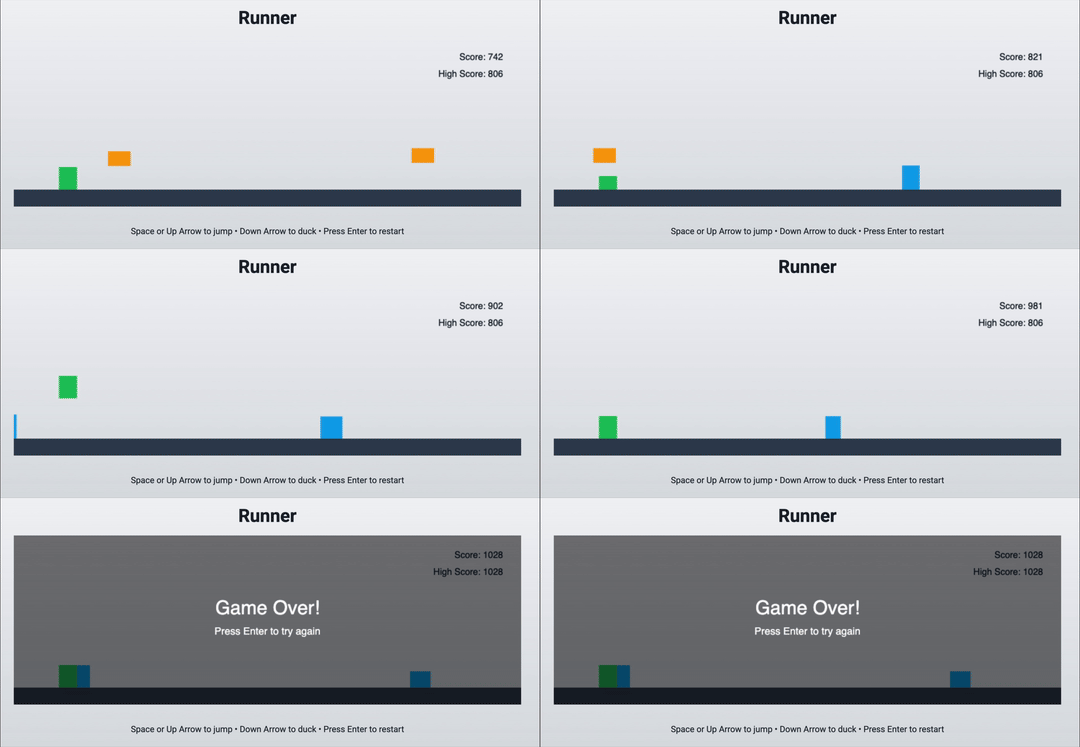
Watching him figure things out was amazing. When the first version of the game ran and the little character square box started jumping, his reaction said it all: pure fascination.
He didn’t want to stop. He wanted to add sounds, backgrounds, more characters, and new obstacles.
He was able to pick up basic logic and simple foo:bar syntax faster than I expected. He also fixed some issues, like increasing gravity, changing a variable in the app code, to make his character jump higher.
const player = {
  width: 32,
  height: 40,
  duckHeight: 20,
  gravity: 0.5,
  jumpForce: 10,
};
Before he went to bed, I gave him a new challenge: think of three new features to add to his game. The next morning, he already had them written down, and a new version of the simple runner game was built.
I helped him with the sprite images, but everything else was his work. I let him fail, experiment, and find his own solutions. I only guided him when he got stuck, showing how to think through the problem instead of fixing it for him. Watching him figure it out on his own was the best part. He loved every moment of it.
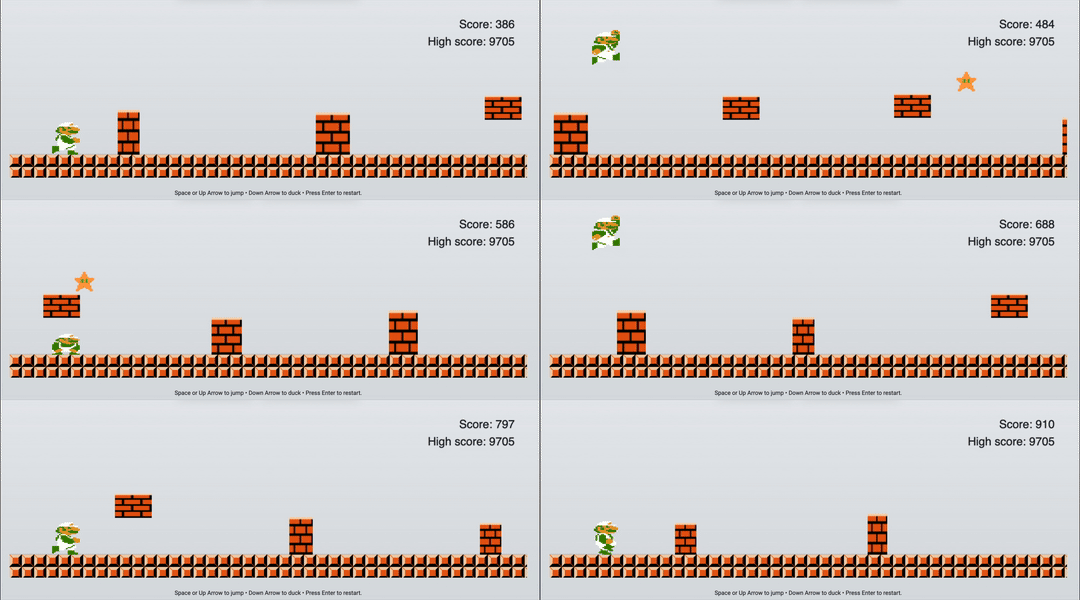
That moment confirmed it: he doesn’t just want to be a software engineer; he already thinks like one.
Seeing how naturally he connected with these tools made me realize something important. As parents, we have access to an entirely new generation of learning platforms. AI and coding assistants are not just for professionals; they can become creative playgrounds for kids. With a little guidance, they can explore problem-solving, creativity, and logic in ways that feel like play.
If you’re a parent, consider showing your child what technology can create, not just what it can consume. Even a short session can plant a seed that grows into a lifelong curiosity. The future of engineering starts young. Sometimes, it starts with a simple game and a spark in their eyes.